If your Rutland County home feels drafty every winter, you are not imagining it. This is a heating-heavy part of Vermont, with about 5,165 heating degree days each year and roughly 74.6 inches of snowfall, so comfort and energy use can shift fast when a home is underinsulated or leaking air. The good news is that you do not need to guess where to start. With the right plan, you can focus your budget on upgrades that improve comfort, support long-term value, and make sense for how homes perform here. Let’s dive in.
Why energy upgrades matter in Rutland County
Rutland County homes work hard through long winters. That makes insulation, air sealing, and dependable heating especially important if you want steadier indoor temperatures and more predictable utility costs.
These upgrades can matter for resale too. Recent buyer research shows that heating and cooling costs, along with windows, doors, and siding, rank among the most important environmental features for buyers. Studies cited by ENERGY STAR have also found sale and resale premiums of 2% to 8% for rated efficient homes.
Start with the house envelope
For most Rutland County homes, the smartest first step is improving the building envelope. That means sealing air leaks and adding insulation before you spend money on new mechanical systems, windows, or solar.
This order matters because a tighter, better-insulated house helps every other upgrade perform better. Efficiency Vermont and DOE guidance both support this approach, especially in colder climates where heat loss drives a large share of annual energy use.
Air sealing comes first
Air leaks are one of the biggest reasons a home feels uncomfortable in winter. Gaps around attics, basements, crawl spaces, and other openings can let warm air escape and cold air move in.
ENERGY STAR estimates that homeowners can save an average of 15% on heating and cooling costs, or 11% on total energy costs, by air sealing and insulating attics, floors over crawl spaces, and basements. In a snowy Vermont climate, that work can also help with comfort, humidity control, noise, dust and pollen infiltration, and ice-dam risk.
Insulation works with air sealing
Insulation is most effective when paired with air sealing. If you add insulation without dealing with leaks, you may not get the full benefit.
In older Rutland County homes, the usual trouble spots are attics, rim joists, basements, and floors over crawl spaces. A trained professional can help identify where your home is losing the most heat and whether ventilation or safety updates should happen at the same time.
Use Vermont incentives while they are strong
One reason to act now is that current Vermont weatherization incentives are unusually generous. Efficiency Vermont’s 2026 program says weatherization rebates can cover up to 90% of project cost, with increased incentives available through the end of 2026 or while funding lasts.
Some households may qualify for even more help. The state Weatherization Assistance Program offers free energy audits, insulation, and air sealing for qualifying low-income Vermonters.
Financing can make timing easier
If upfront cost is the main obstacle, financing may help you move sooner. Efficiency Vermont offers low-interest Home Energy Loans up to $25,000, with 0% interest for income-qualified borrowers.
There is also on-bill financing through WRAP for some weatherization projects. That program requires no credit check, rolls payments into the utility bill, and if the home is sold, the payment stays with the account.
Plan heat pumps after weatherization
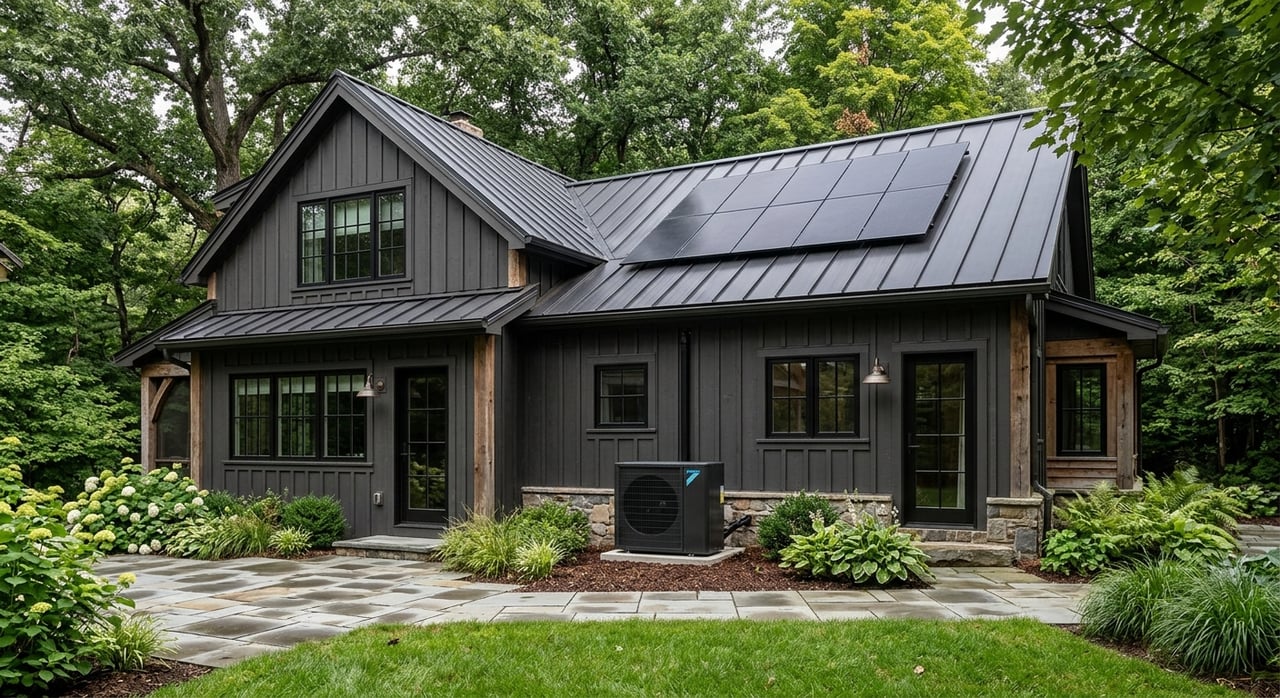
Once your home is better sealed and insulated, it may be time to look at heating and cooling equipment. In many Rutland County homes, that means evaluating a cold-climate heat pump.
DOE says air-source heat pumps can provide efficient heating and cooling and can deliver two to four times more heat energy than the electricity they consume. Efficiency Vermont says cold-climate heat pumps can handle most Vermont heating needs and can operate to about -15°F, though a supplemental heat source is usually recommended for the coldest days.
Heat pump savings depend on your current fuel
Heat pumps are not a one-size-fits-all savings story. Efficiency Vermont notes that they tend to make the most financial sense when replacing baseboard electric, propane, or oil.
If you are replacing natural gas, wood, or pellets, your monthly bills may not necessarily go down. That is why it helps to look at your current fuel, your home’s condition, and your electrical capacity before committing to equipment.
Check for panel upgrades and rebates
Some homes need an electrical-panel upgrade before a heat pump can be installed. That is another reason to get a contractor involved early in the planning process.
As of 2026, Vermont rebates include up to $475 off a ductless heat pump and up to $2,200 off a ducted system, with additional utility and income-based incentives available in some cases. If you are in Green Mountain Power territory, qualifying customers may be able to combine the GMP heat-pump rebate with Efficiency Vermont’s rebate in one step.
Treat windows as a targeted upgrade
Windows are important, but they are usually not the best first place to spend a limited renovation budget. DOE says heat gain and heat loss through windows account for 25% to 30% of residential heating and cooling energy use, yet existing windows in good condition can often be improved without full replacement.
That may mean caulk, weatherstripping, storm windows, or other targeted improvements. In many Rutland County homes, those steps can be more cost-effective than replacing every window at once.
Replace windows when the condition calls for it
Full window replacement usually makes more sense when the existing units are failing. Common signs include rot, persistent condensation issues, or windows that no longer operate or seal properly.
If replacement is needed, DOE recommends looking for ENERGY STAR and NFRC labels and choosing low U-factor products for colder climates. Proper installation also matters, so trained professionals are worth the investment.
Evaluate solar after roof and budget checks
Solar can be a smart long-term upgrade, but it usually belongs later in the planning sequence. Before you look at system size or pricing, it is important to confirm that your roof, shade conditions, and electrical setup make the project practical.
DOE says rooftop solar works in all climates, but the best sites usually have south-facing roofs, slopes between 15 and 40 degrees, and minimal shade. Roof age matters too, since replacing a roof soon after adding panels can create unnecessary extra cost.
Community solar may be another option
If your roof is shaded, aging, or poorly oriented, rooftop solar may not be the best fit. DOE notes that community solar can still provide benefits without requiring roof ownership.
That can be useful for buyers who want lower electric costs or a more sustainable setup but do not want to take on a roof-based installation right away.
Verify Vermont net-metering rules first
Solar economics are not static. DOE notes that payback depends on how much electricity you use, roof shading and slope, financing, and how much your utility compensates you for exported power.
In Vermont, net-metering compensation is under review through the 2026 biennial process. Before designing a system, you should confirm the current rules and run the numbers based on your property, not a generic estimate.
Know when to bring in specialists
Some projects are simple enough to plan in stages, but others need expert input from the start. If your home has high utility bills, uneven temperatures, multiple comfort issues, or several aging systems at once, an energy auditor or certified contractor is often the best first call.
An auditor can help identify the most significant and cost-effective improvements. Efficiency Vermont also offers free virtual home energy visits, which can be a useful way to sort through your options before making larger decisions.
The right pro for each project
Different upgrades call for different specialists. Bringing in the right person early can help you avoid expensive sequencing mistakes.
- Energy auditor or certified contractor: best for whole-house planning, comfort issues, and prioritizing upgrades
- HVAC contractor: best for heat-pump sizing, installation, and electrical-service questions
- Window installer: best when windows are failing or replacement is under consideration
- Roofer or solar professional: best for roof condition, shading, structural considerations, and solar system suitability
Think about resale while you upgrade
If you plan to sell in the next few years, energy improvements can still be worth it. Buyers often respond to lower operating costs, comfort, and a home that feels well maintained, not just to the equipment itself.
That is especially relevant in Rutland County, where winter performance is not a minor detail. A home that feels warmer, less drafty, and less expensive to run may stand out more than one with expensive upgrades that were done in the wrong order.
Focus on practical value, not hype
The safest resale message is simple. Buyers care that the home is comfortable, efficient, and thoughtfully improved.
Avoid assuming every project will pay for itself in the same way. Savings depend on the starting condition of the home, the fuel being replaced, installation quality, roof shading, and current utility compensation rules.
A smart upgrade order for Rutland County homes
If you want a simple framework, this is the usual order that makes the most sense for homes in this area:
- Seal air leaks
- Add or improve insulation
- Evaluate heating and cooling equipment
- Repair or replace windows and doors as needed
- Review solar after roof and policy checks
That sequence helps you spend money where it is most likely to improve comfort and performance first. It also helps you avoid oversizing equipment or making cosmetic upgrades before fixing the root causes of heat loss.
If you are weighing which upgrades make sense before buying, before listing, or after moving into a new home, working with a team that understands both property value and building performance can make the process much clearer. For local guidance on Rutland County homes, renovation potential, and energy-conscious resale strategy, connect with Mandolyn McIntyre Crow.
FAQs
What energy-efficient upgrade should Rutland County homeowners do first?
- In most cases, start with air sealing and insulation because they improve comfort, reduce heat loss, and help later upgrades like heat pumps work better.
Are heat pumps a good fit for Rutland County, Vermont homes?
- Cold-climate heat pumps can handle most Vermont heating needs and provide cooling too, but they usually work best after weatherization and often need a supplemental heat source for the coldest days.
Should Rutland County homeowners replace windows before insulating?
- Usually no. If your windows are still in good condition, targeted improvements like caulk, weatherstripping, or storm windows may be more cost-effective than replacement.
Are there Vermont rebates for home energy upgrades in 2026?
- Yes. Efficiency Vermont says weatherization rebates can cover up to 90% of project cost, and rebates are also available for ductless and ducted heat pumps, with some added utility and income-based programs.
Is solar worth considering for a home in Rutland County?
- It can be, but the answer depends on roof age, shade, roof orientation, electricity use, financing, and current Vermont net-metering rules.
Can energy-efficient upgrades help resale value in Rutland County?
- They can support resale appeal because buyers often care about lower heating and cooling costs, comfort, and homes that feel well maintained and efficient to operate.